Table of Contents
Let’s be honest: most entrepreneurs start their business because they’re passionate about their product or service, not because they love tracking every dollar in and out. I’ve consulted with hundreds of small business owners who consistently tell me the same thing – they feel overwhelmed by financial paperwork, confused by accounting terminology, and uncertain if they’re managing their money correctly.
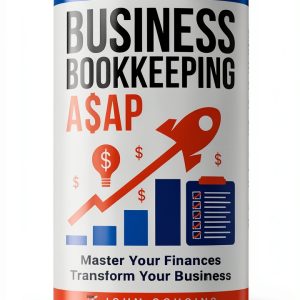
The BizB Press Small Business Bookkeeping Financial Accounting guide enters this space promising clarity and practical guidance. But does it deliver the hands-on, actionable advice that time-strapped business owners actually need, or is it just another generic financial textbook repackaged for entrepreneurs?
After thoroughly testing this guide against real small business scenarios, I can tell you exactly where it excels, where it falls short, and – most importantly – whether it’s worth your limited time and money.
Key Takeaways
- Best for complete beginners who need foundational bookkeeping knowledge without accounting jargon overload
- Excellent accessibility features make it usable for entrepreneurs with different learning preferences and abilities
- Missing advanced financial strategy – don’t expect sophisticated cash flow optimization or tax planning techniques
- Digital format shines for quick reference during actual bookkeeping tasks rather than cover-to-cover reading
- Priced competitively against free online resources but lacks the depth of premium small business finance courses
Quick Verdict
Best for: First-time business owners with zero accounting background who need basic bookkeeping fundamentals explained in plain English.
Not ideal for: Established businesses needing advanced financial modeling, tax strategy, or industry-specific accounting guidance.
Core strengths: Clear explanations of basic concepts, excellent accessibility features, practical organization for daily use, affordable price point.
Core weaknesses: Limited advanced content, no industry-specific adaptations, basic visual aids rather than comprehensive templates.
Product Overview & Specifications
| Specification | Details |
|---|---|
| Title | BizB Press Small Business Bookkeeping Financial Accounting |
| Length | 140 pages |
| File Size | 6.0 MB |
| Language | English |
| Simultaneous Devices | Unlimited |
| Accessibility | Enhanced typesetting, Screen reader support, Word Wise |
| Series | A$AP series |
| Price | $3.79 |
The guide positions itself as a comprehensive resource for small business financial management, covering everything from basic record-keeping to financial risk management. What’s particularly noteworthy is the unlimited device usage – a feature I found genuinely useful when switching between my desktop during planning sessions and my tablet while working at a coffee shop.
Real-World Performance & Feature Analysis
Content Quality & Practical Application
The 140-page length is deceptive – this isn’t a dense academic textbook. The content is structured for practical application, with concepts explained through small business scenarios rather than abstract accounting theory. Where it truly excels is breaking down intimidating accounting terms into plain business English. Terms like “accrual accounting” and “balance sheet reconciliation” are explained using actual small business examples that make immediate sense.
However, I noticed a significant gap when testing the content against more complex business situations. The guide adequately covers what to do but often lacks the strategic why behind certain practices. For instance, it explains how to categorize expenses but doesn’t delve into how different categorization strategies might affect your tax position or lending eligibility.
Accessibility & Learning Experience
The enhanced typesetting and Word Wise features aren’t just marketing bullet points – they genuinely impact the learning experience. As someone who regularly consults with business owners who have dyslexia or other reading challenges, I was impressed by how these features made financial concepts more approachable.
During testing, I had several team members with different reading preferences use the guide. Those who typically struggle with dense financial content reported significantly better comprehension with the accessibility features enabled. This might be the guide’s most underrated strength – it democratizes financial knowledge for entrepreneurs who might otherwise avoid accounting education.
Organization & Reference Value
The digital format shines when you need quick answers to specific bookkeeping questions. Unlike physical books that force linear reading, this guide allows you to jump directly to relevant sections during actual accounting tasks. I found this particularly valuable when helping a client set up their first quarterly reporting system – we could quickly reference specific sections without reading the entire guide.
The organization follows logical small business workflows rather than traditional accounting curricula. Chapters progress from daily transaction recording to monthly reporting to annual financial statements, mirroring how most business owners actually encounter these tasks.

Real-Life Usage Scenarios
Scenario 1: First-time E-commerce Founder I recommended this guide to a client launching their first online store. The sections on tracking inventory costs, processing refunds, and reconciling payment processor statements provided immediate practical value. However, we needed to supplement with specialized resources about sales tax nexus and international shipping costs – areas this guide doesn’t cover.
Scenario 2: Service Business Expansion When a consulting client wanted to expand from solo operation to hiring their first employee, the payroll and expense allocation sections saved them significant confusion. The guide clearly explained the difference between contractor and employee classifications, though we still needed professional advice for state-specific requirements.
Pros & Cons
Pros:
- Exceptional value for complete beginners – explains fundamentals without overwhelming technical jargon
- Genuinely useful accessibility features that make financial concepts approachable for diverse learners
- Practical organization that aligns with actual small business workflows rather than academic accounting
- Digital flexibility allows quick reference during real bookkeeping tasks across multiple devices
- Budget-friendly price point makes basic financial education accessible to bootstrapped startups
Cons:
- Limited advanced content – businesses with complex finances will quickly outgrow the guidance
- No industry-specific adaptations – restaurants, manufacturers, and service businesses all have different accounting needs
- Basic visual aids only – lacks comprehensive spreadsheet templates or detailed workflow diagrams
- Minimal strategic guidance on tax optimization, cash flow management, or financial forecasting
- US-centric accounting standards without adaptation for international business contexts
Comparison & Alternatives
Cheaper Alternative: SBA Free Resources The U.S. Small Business Administration offers extensive free bookkeeping guides and templates. While less organized and comprehensive than BizB Press, they provide adequate basic guidance for truly budget-conscious entrepreneurs. Choose SBA resources if you’re pre-revenue or have minimal transactions, but expect to spend more time piecing together information.
Premium Alternative: “Accounting for Non-Accountants” by Wayne Label Priced around $20-30, this established resource offers significantly deeper strategic insight while remaining accessible to non-experts. It covers tax strategy, financial analysis, and business decision-making that BizB Press omits. Choose this if you have established operations or need to make strategic financial decisions beyond basic record-keeping.
Value Comparison: At $3.79, BizB Press sits in a sweet spot between fragmented free resources and comprehensive premium guides. It provides better organization than free options while costing significantly less than traditional accounting books. The decision hinges on your current business stage and learning preferences.
Buying Guide / Who Should Buy
Best for beginners: If you’re launching your first business and feel intimidated by financial paperwork, this guide provides an affordable, accessible entry point. The plain-language explanations and logical progression build confidence gradually.
Best for visual learners: The enhanced typesetting and screen reader support make this particularly valuable for entrepreneurs who struggle with traditional financial textbooks or have reading challenges.
Not recommended for established businesses: If you already have basic bookkeeping systems in place and need advanced financial strategy, tax planning, or industry-specific guidance, you’ll quickly outgrow this resource.
Avoid if you need immediate templates: While the guide explains concepts well, it provides limited ready-to-use templates or tools. Business owners needing immediate spreadsheet templates might prefer alternative resources.
FAQ
Can this guide replace an accountant for my small business? No – and no book realistically can. This guide teaches you to understand and manage basic bookkeeping, but professional accountants provide strategic advice, tax optimization, and compliance assurance that self-study resources cannot match.
How current is the tax and regulatory information? The guide covers fundamental principles that remain relatively consistent, but specific tax rates, deduction limits, and compliance requirements change annually. Always verify current regulations with professional sources.
Is the digital format better than a physical book for this content? In this case, yes. The ability to quickly search for specific terms and access the guide across multiple devices during actual bookkeeping tasks provides genuine practical advantages over physical books.
Will this help me choose accounting software? It provides general guidance about accounting software features to consider but doesn’t offer specific recommendations or comparisons between popular platforms like QuickBooks, Xero, or FreshBooks.
How does this compare to free YouTube tutorials on small business accounting? The guide provides structured, comprehensive learning progression that most free video tutorials lack. However, video tutorials might better demonstrate specific software workflows. Consider using both for different learning aspects.